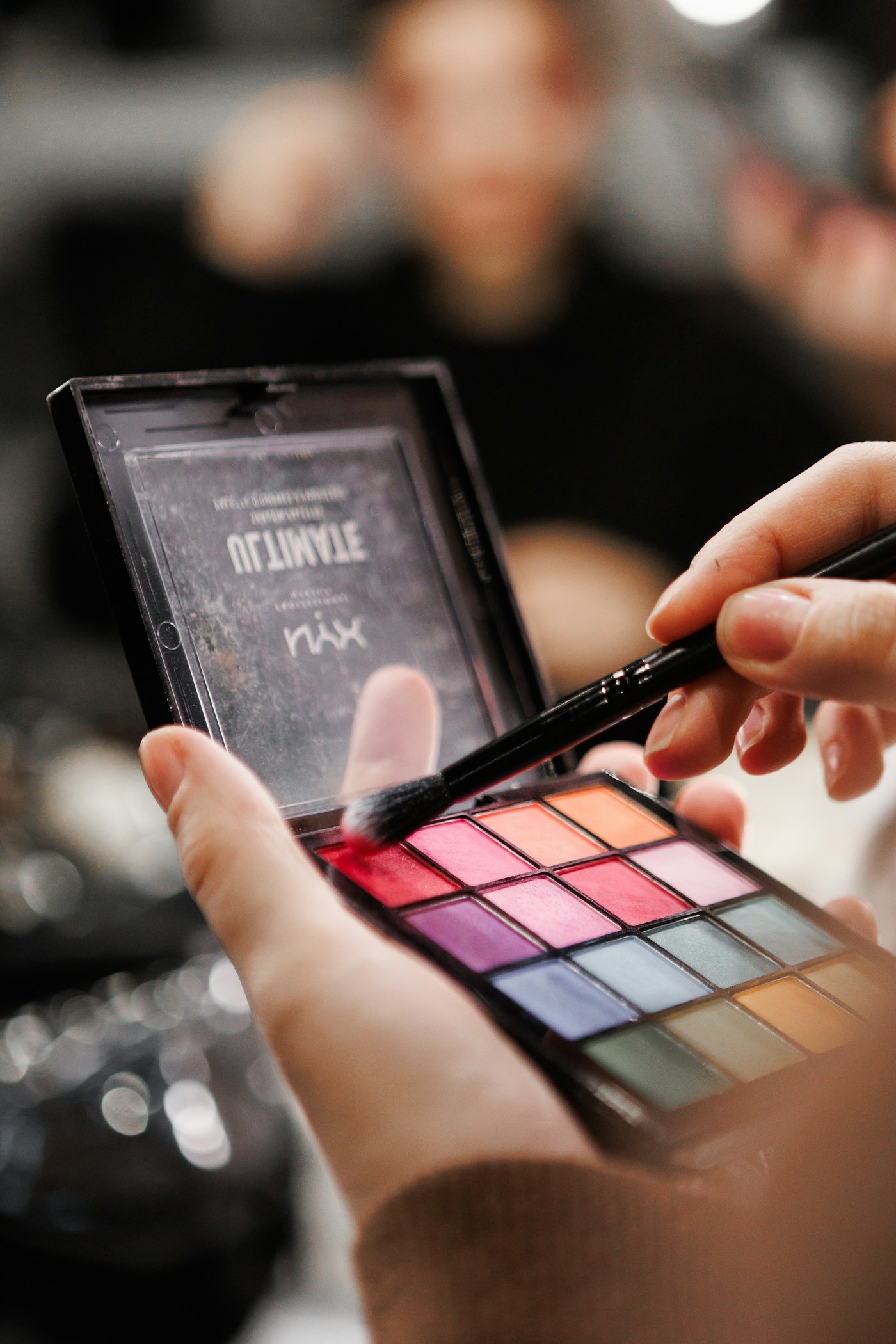
Getting ready for dinner becomes easier when makeup has one clear focus. A strong lip, a softly defined eye, or a luminous complexion can each set the mood without requiring every feature to compete. The useful question is what you want to maintain during the evening. A look that needs a mirror after every sip may be enjoyable for one occasion and impractical for another.
Start with the outfit and venue
Lay out the clothes before opening the makeup bag. A high neckline, statement earrings, or a patterned dress already contributes visual detail. Makeup can echo that mood without matching every color. Consider the setting too: bright early dinner light makes shade selection easier to assess than a dark bathroom, while an outdoor journey may affect how comfortable you feel in a heavily layered base.
For a dinner directly after work, choose a change you can complete in a few minutes. Refreshing a lip color and adding definition close to the lashes may be enough. If the occasion allows a full getting-ready ritual, leave time to evaluate the result in useful light rather than adding another step simply because there is a product available.
Choose between lip maintenance and eye work
A defined lip can make a familiar outfit feel deliberate, but precision may require a liner and touch-ups. A sheer color is easier to reapply and can be a good choice for a meal. Neither approach is more sophisticated by default. Think about your comfort with a visible outline, how much product you want to carry, and whether you enjoy checking it during the evening.
An eye focus may suit someone who prefers a low-maintenance lip. Start with a shape you already know how to create, using one or two tones instead of a complicated palette. A small amount of contrast placed carefully can look intentional. Trying a new adhesive, unfamiliar contact-lens combination, or ambitious technique just before departure creates an avoidable time pressure.
Work with the base you already understand
If your daytime complexion makeup still looks comfortable, avoid automatically covering it with another complete layer. Assess where a small correction would help, and use products according to their directions. When starting fresh, choose the coverage you like rather than assuming evening requires a heavier finish. Let the desired effect guide the quantity and placement.
Powder can change shine and texture, so apply deliberately rather than dusting everything out of habit. Highlight can catch light attractively but may be more visible than expected in photographs. Take a quick picture in ordinary room light if that helps you judge balance, remembering that one camera image is a reference rather than a definitive view of your face.
Shop for a repeatable look
Use the official Sephora lipstick department to compare textures and shade families, and check individual product descriptions. A versatile single shade may serve more occasions than a large seasonal set. For eye products, consider whether the shades you will use justify the palette's size, and whether you already own a near-equivalent.
Look at the purchase as a complete routine. A formula that requires another primer, a special brush, and a matching remover may cost more in time and money than its shelf price suggests. That does not make it a poor choice, but those additions should be deliberate. Keep the receipt and review return conditions before opening anything you cannot sample.
Pack a small touch-up plan
A lip product, a tiny mirror, and any genuinely necessary tool are usually easier to manage than your entire makeup bag. Use a secure pouch so a cap cannot loosen among your keys. After the event, remove makeup with a method appropriate to the products you wore; the next morning is easier when the evening ends with a manageable routine.
FAQ
Must evening makeup be darker? No. A familiar look with a considered finish can suit dinner beautifully. The venue and your preferences matter more than a rule.
What if I have only five minutes? Choose the single change with the biggest effect for you, prepare it before leaving work, and skip unfamiliar techniques that need practice.