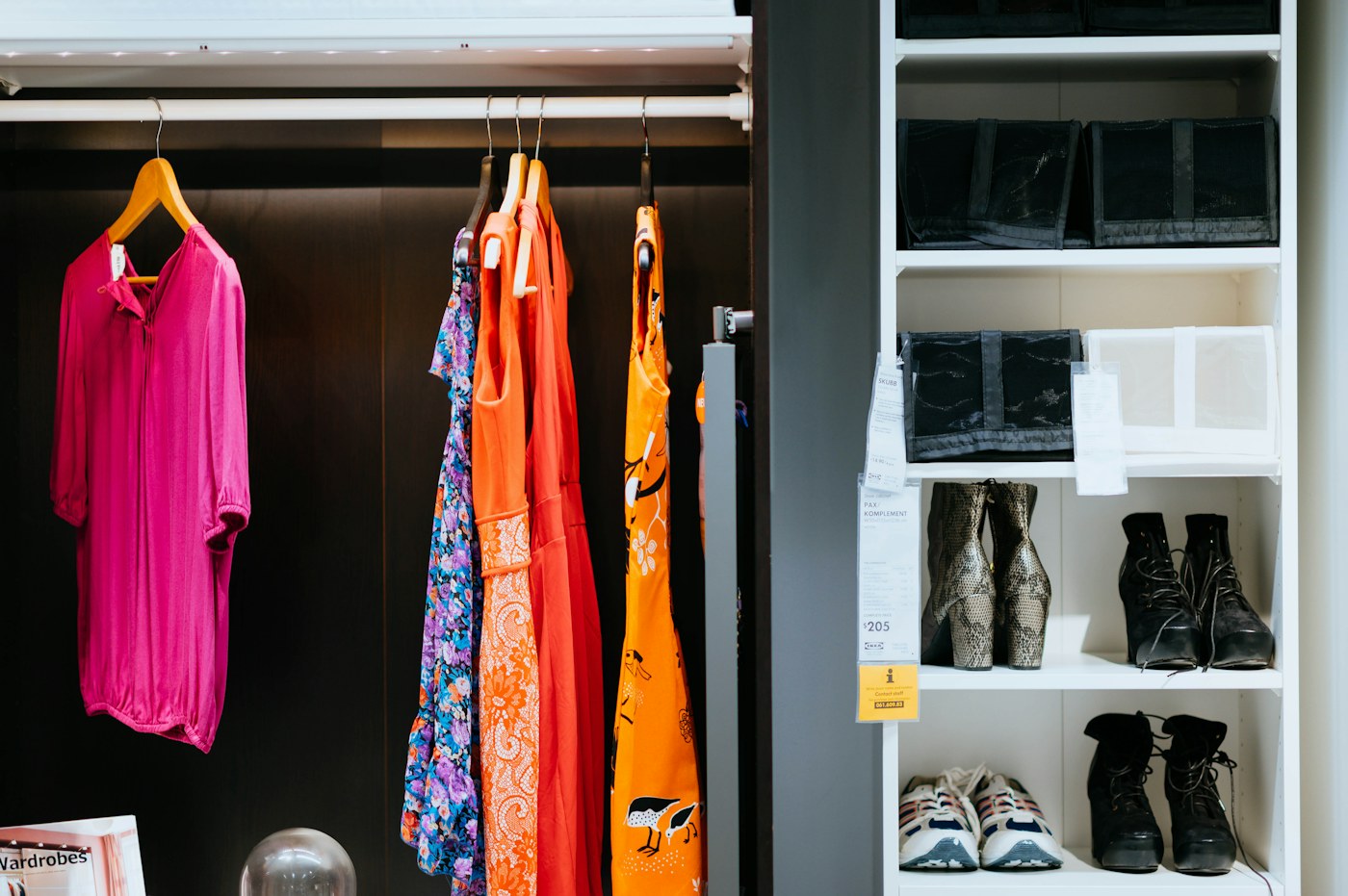
A capsule wardrobe is most useful when it begins with a calendar, not a shopping list. Five office days, two remote days, a school run and an occasional evening out require different clothes. A beautifully coordinated rail can still fail if it contains nothing suitable for your Monday morning.
Instead of chasing a universal number of pieces, use the next two weeks as your brief. Count the outfits you genuinely need, include the weather and consider how often you do laundry. The result should reduce decisions while preserving enough choice to feel like your wardrobe.
Audit by activity
Divide your week into practical settings: work, casual errands, exercise, social plans and specific requirements. Then note how much those categories overlap. A relaxed office may share trousers and knits with a weekend wardrobe; a uniformed job may need very little additional work clothing.
Pull out the pieces you wore last month. Look for the reasons they earned their place: a comfortable rise, a washable fabric, a sleeve that fits under your coat. Those observations are more valuable than a generic essentials list. A white shirt is only essential if it serves your life.
Build outfits before counting
Put a top, bottom, shoe and layer together. Photograph the combination for your own reference and repeat with another top. If a trouser works only with one difficult blouse, it may not be a strong foundation. If a cardigan works across three settings, it deserves attention even if it looks quiet on a hanger.
Try the outfits on rather than arranging everything flat. Hem lengths, sleeve volume and waist placement change how pieces cooperate. Include underwear and socks in the check; an otherwise easy outfit becomes inconvenient if it requires a specialist layer that is never clean when needed.
A shopping checklist
| Question | Useful answer |
|---|---|
| What gap does it fill? | A named outfit or recurring activity |
| What does it work with? | Two existing combinations |
| Can I maintain it? | Care that fits the normal routine |
| Can I return it? | Terms checked before ordering |
These are decision prompts, not rigid rules. An occasion outfit may have fewer uses and still be worthwhile. The distinction is between buying intentionally for that role and pretending every purchase will be an everyday staple.
Plan for laundry and temperature
A small wardrobe needs enough duplication to function between washes. If one shirt carries three planned outfits, consider whether it will be available each time. Buying fewer pieces does not mean asking one garment to be ready every morning. Include a backup for busy days.
Layers help a wardrobe cross seasons, but only if they fit together. Check that the knit fits beneath the jacket, and the jacket beneath the coat. A palette can make combinations easier; it does not fix incompatible sleeve shapes or a tight shoulder.
Spend where the friction is
If every outfit fails at the shoe stage, concentrate your budget there. If you have useful bottoms but no suitable work tops, do not buy another trouser because it is discounted. Make a ranked list, set a comfortable budget and buy the highest-impact gap first.
Official category pages, such as UNIQLO's women's shop, help compare types of layers. Check each item's measurements, composition and care before deciding. A category page is a browsing resource, not a promise that every item suits your capsule.
Review your plan after two weeks. Notice which outfit you repeated willingly and which you avoided. Adjust the list from that evidence. Seasonal changes and a different schedule may call for a revised capsule; the system should adapt with you rather than becoming another obligation.
Frequently asked questions
Must everything be neutral?
No. A repeated accent color or pattern can be useful if it works with your clothes.
Should I discard everything outside the capsule?
No. Store occasional pieces separately if helpful, and review them over time.
Next, assess your white shirt or work tote.